Resources
Resources
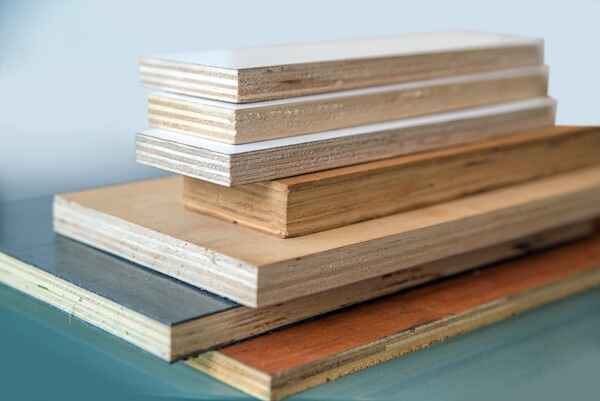
Interested in knowing more about plywood and its manufactunng processes? Here are some artides that will make you understand the various aspects of plywood manufacturing...
Plywood Manufacturing Process
This article briefly discusses what goes into the manufacturing of different types of plywood.
Plywood Basics
There are many types of plywood like shuttering, marine and commercial. Read more about various grades of plywood and how to choose plywood.
Manufacturing Process
Plywoods are manufactured by the procedure as follows: -
- Timber logs are soaked in water to make them workable on various machines.
- Thin Sheets of Veneers are peeled from the logs. During peeling knots, barks and other natural defects are removed. The good quality of veneers are then send for drying.
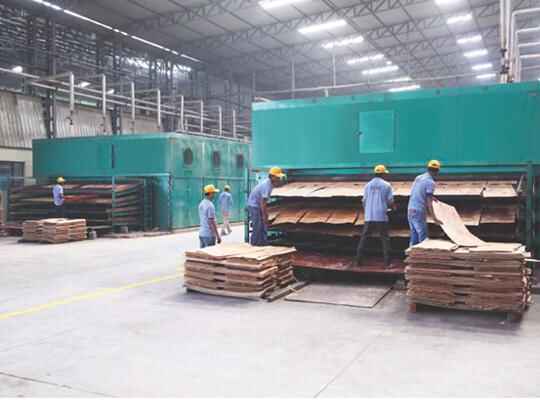
- Drying is done in driers/ seasoning chambers, moisture content from the wooden veneers are brought down to approximately 5 to 10%. If there is higher moisture content, the absorption of bonding glue is affected. Thus for proper manufacturing of Plywoods it is important to bring the moisture content low to aid absorption of bonding glue.
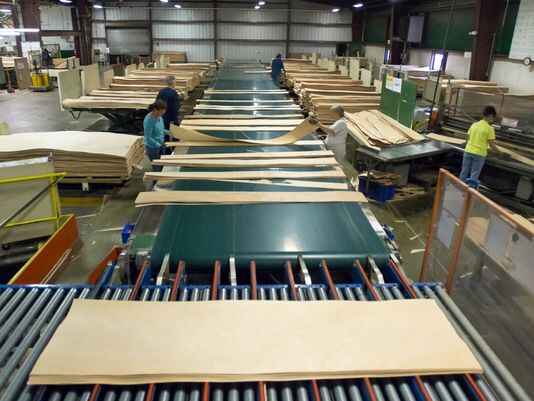
- Glueing is done by passing the veneers through Glue Spreader which spreads bonding glue (Phenol formaldehyde) on both sides over the veneers.
Construction Of Plywoods
The Veneers are stalked, one above the other, alternatively along and across the grains to the required thickness of plywood. Face veneers on both the top and bottom layer is put into construction here. The Film is also laid during the construction on top and bottom of the Face Veneers, for manufacturing of film faced shuttering plywood.
Pressing:
The constructed Veneers layers are sent into the hot press for pressing. Pressing time and temperature depends on the thickness of glue type and density of Plywood. The Plywood sheet with number of veneers is formed after pressing.Sizing:
The pressed sheet of Plywood is then passed through parallel saw to make plywood on required sizes and right angles at corners.Sanding:
Furniture and decorative plywoods are then passed into a double belt sander for making the faces of plyood smooth. Sanding is not required for film faced shuttering plywoods as the film itself gives a very clean and smooth finish.Testing:
One sheet on each lot of Plywood is sent to the lab for testing as per IS codes. Balance sheets are marked, checked and stalked in dispatch godown ready for dispatch. Plywood Basics.
The Shuttering Process
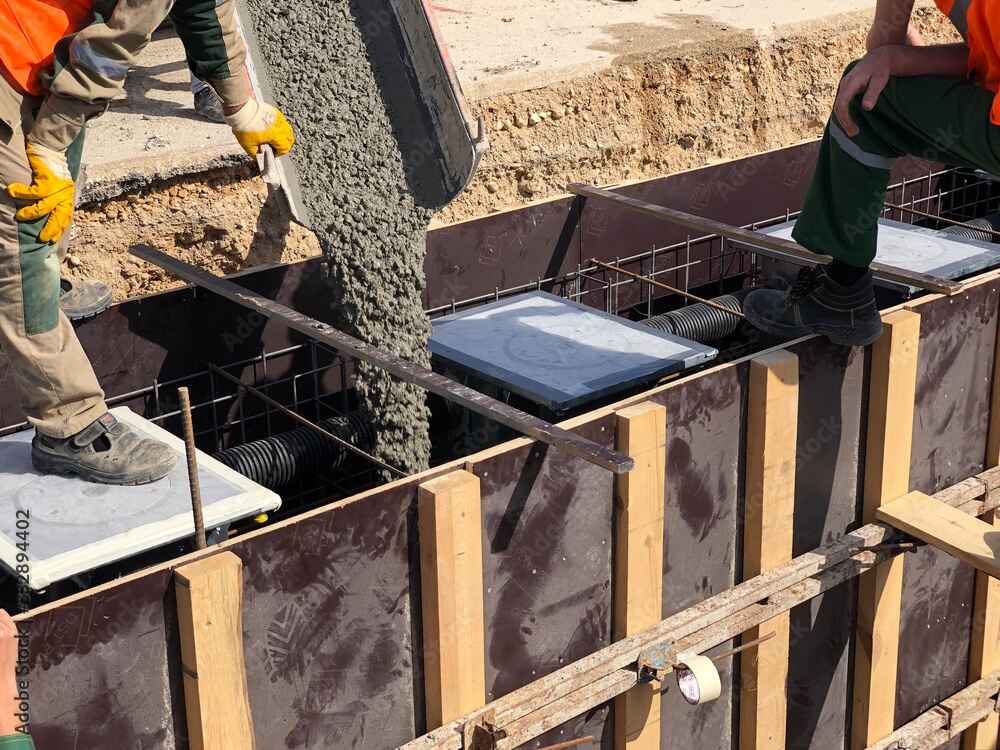
In the building & construction process, the poured concrete needs to be held in place till it hardens. Shuttering is a process whereby concrete is held in place while it solidifies. Shuttering, (also called as formwork) are temporary moulds in which the concrete is poured in-situ. Shuttering is usually a specialty job that involves lot of skilled workmanship, especially for vertical concreting. Hence, the shuttering must be sturdy and capable of withstanding the pressure of concrete and the weight and force of the vibration equipment.
There are three types of shuttering:
- Plywood and Timber Shuttering
- Steel Formwork Shuttering
- Aluminium Formwork Shuttering
Of the above three, plywood shuttering is the most economical and flexible, as the plywood used for shuttering can be cut into any shape. Plywood shuttering is also one of the commonest forms of shuttering.
Mould Material
Usually, a plywood shuttering mould consists of a timber 'brace' and a plywood lining. Shuttering oil is applied to Plywood surface, facing the concrete. Shuttering plywood is one of the most preferred material for timber formwork as it is all weather proof, lightweight, yet sturdy enough to sustain the pressure of the concrete. The thickness of the shuttering plywood may vary from 9 mm. to 18 mm. However, the most common thickness used is 12 mm. The timber braces are fixed to the plywood using screws or nails. Thus manufacturing of these formworks is very quick and speedy.
The Release Process
Once the concrete is set, the shuttering has to be removed. To achieve this, all shuttering is coated with a mould oil before the concrete is poured in the mould. The most commonly used release agent is known as 'shuttering oil'. However, in film faced shuttering plywoods (Like Techno & Platinum Ply). The Phenolic Film itself acts as a non-sticky agent & thus shuttering oil is not essential. For extra precautions very little shuttering oil may be used on the film face of the plywood, especially at the joints in formworks.
Plywood Basics
Veneer is manufactured of wooden logs. Plywood is value added veneer. It is a manmade material made out of the wood of different trees, the most popular being Gurjan, Oak, Poplar & Eucalyptus. However, plywoods in different regions are made from the nearest available timber. The logs are chosen for their straightness and roundness. Each layer of Veneer (called a core) is arranged so that the direction of the wood fibers or grain is placed at right angles to the layer next to it. After pressing, the plywood is conditioned and finished for packing, testing & dispatch.
Broadly speaking, there are three major types of plywood.
- Interior plywood (Commercial Plywood) is made by using glues that are non-water proof but are moisture resistant (Urea Formaldehyde). These are used in interiors for making furniture, paneling & other interiorworks.
- Exterior plywood (Marine Plywood) is made by using glues that are water proof (Urea Formaldehyde). These are used in places highly prone to moisture and chemicals and also exterior works
- Shuttering Grade Plywood is made of selected hardwood core veneers for grater tensile strength. The glue is made using high quality phenol Formaldehyde for excellent bonding, to make the whole plywood monolithic like a shuttering plate. A thick film coat with added phenol glue is additionally provided on the top and bottom surface to considerably enhance repitative usage.
Tips for Buying Plywood
- Thumb rule test for shuttering plywood: Soak the plywood in water at room temperature for 48 Hrs. minimum then dry in sunlight for 4 Hrs. It should not delaminate nor swell more than 4%. Or for instant testing, boil a 15" x 15" plywood piece in water for 60 minutes. It should not delaminate nor swell more than 6%.
- Avoid plywood where a thick core is sheathed with thin face veneers.
- The piles should be parallel to one another with the alternate layers set at 90 degrees. This will avoid warping.
- To avoid warping, select plywood where the number of veneers on each side of the core layer must be equal in number and thickness.
Advantages of Plywood
Advantages of Shuttering Plywood:
- Saving of wood: waste is confined to the small core and bark that remain after peeling away the strips
- Strength: Generally speaking, wood is more strong (about 24-25 times stronger) along the grains than its own strength of across the grain. But In plywood, the alternate core/wood veener are constructed at 90° to each other. This ensures that in strength and weight carrying capacity of plywood is stronger than wood in both directiond of loading.
- Reduced shrinkage, swelling and warping: The balanced construction of plywood (with the grain drrection of adjacent plies at 90° to each other) equalizes cross layer stress. This in turn reduces shrinkage, swelling and warping.
- Compared to solid wood, the chief advantages of plywood are that the properties along the length of the panel are more nearly equal to properties along the width
- Plywood offers greater resistance to splitting
- Plywood can be moulded into different shapes and sizes
- Improved utilization of wood - plywood can cover large areas with a minimum amount of wood fibre Plywood has high strength-to-weight and strength-to-thickness ratios
- The stiffness and strength of plywood is much more than that of solid wood
- Plywood makes an excellent choice for users that call for fastners to be placed very near the edges of a panel because of its alternating grain direction that significantly reduces splitting
- Plywood comes in convenient sizes
Shuttering Plywood Offers Many Advantages:
- Low Cost & Investment in manufacturing of formworks.
- Easy Handling as compared to Steel Plates.
- Formwork of any size & shape can be easily made at site as plywood is highly workable with carpentry tools.
- Easily available is various sizes as per shuttering requirements, sizes & designs.
- Use of new shuttering for formworks at different sites is possible. This lowers transportation & inventory as compared to steel formworks.

Transparency & Reliability

Obligation To Service

Care For Your Products

Buy Best Save Big

Mutha & Rathod Timber Industries LLP
Unit no 4, Milkat no 116, Sr no 11/8,
besides Aster Myrah, behind Dharmavat petrol pump, Village Pisoli, Pune - 411060.
Contact Numbers:
International: 91 (20) 67023281,
+91 9766907233
Copyright © MUTHA & RATHOD TIMBER INDUSTRIES LLP
Developed By  Neuromonk Infotech Pvt Ltd